Danish
 English
 German

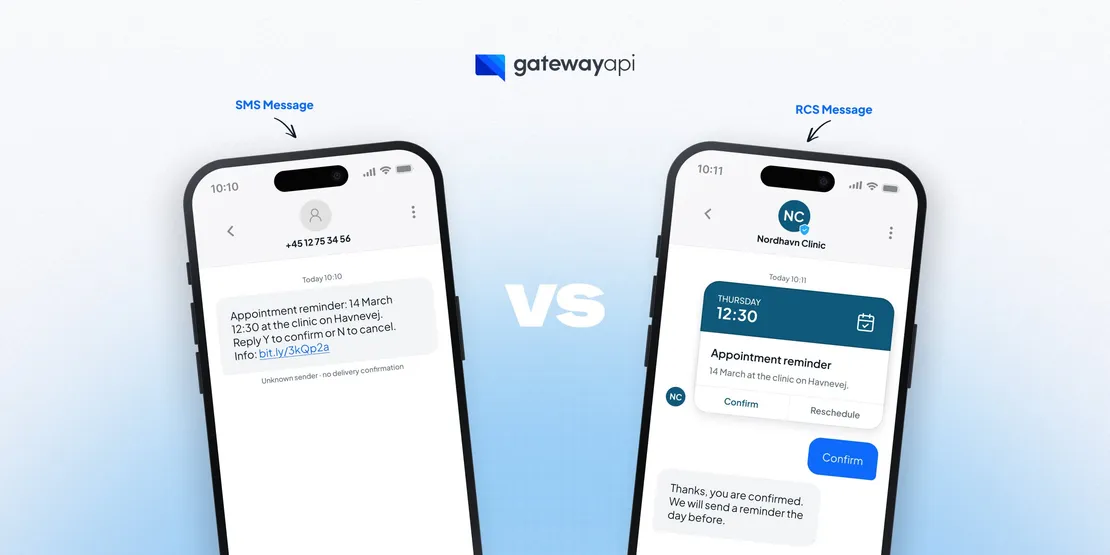
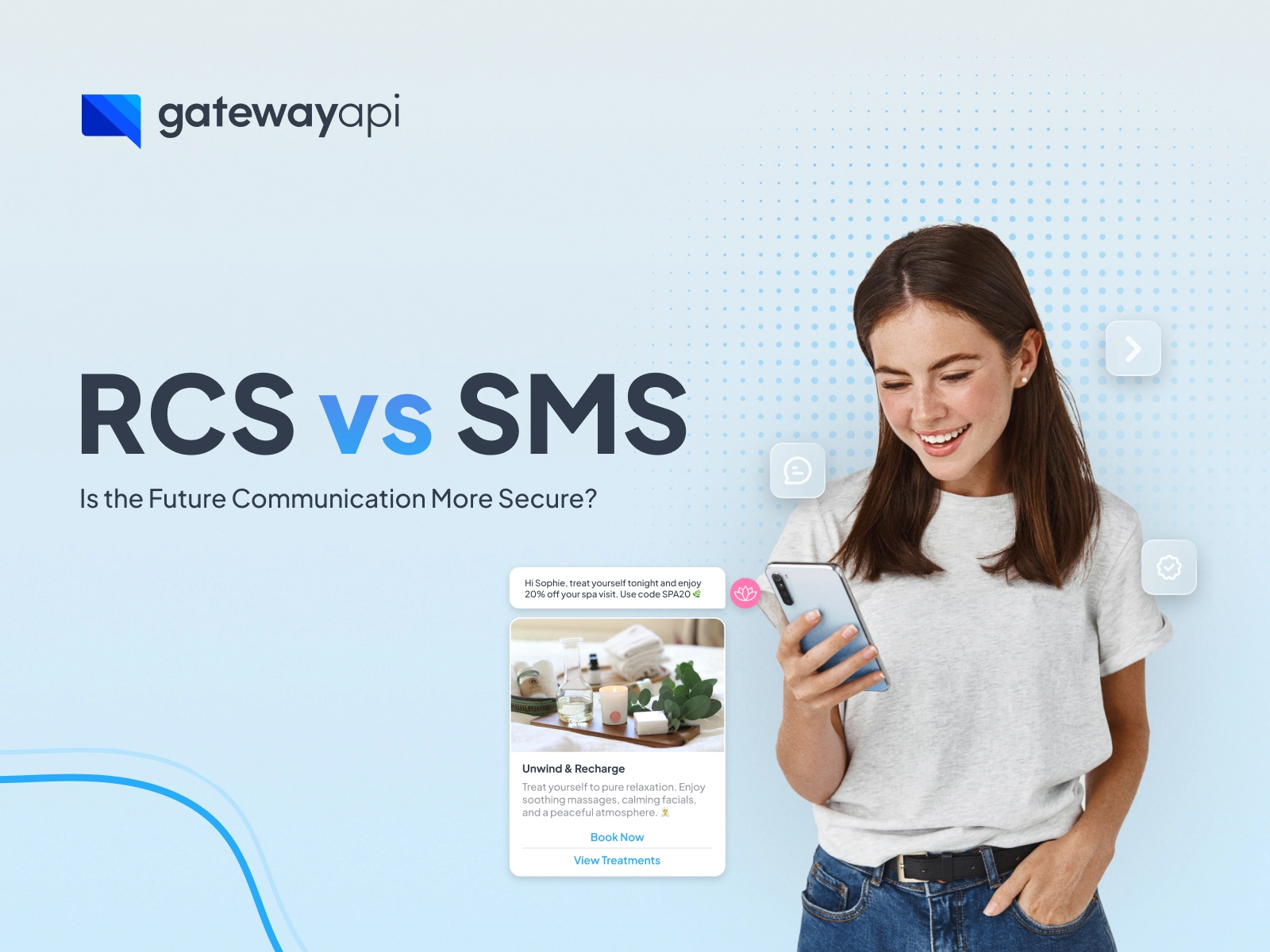
On paper, RCS completely outclasses traditional SMS – delivering rich media, dynamic CTA buttons, read receipts and verified brand identity directly into the native messaging app.
But that is not the whole story. Evaluating them as mutually exclusive options misses the bigger picture. SMS remains the reliable workhorse of business communication, delivering plain text across cellular channels to virtually every phone without requiring mobile data. RCS on the other hand operates as a modern powerhouse, opening up whole new ways businesses can interact with their customers.
Below, we will take you through the key aspects of SMS and RCS and discuss where they differentiate as well as strengths and weaknesses and where they complement each other.
Common questions about RCS and SMS
What is the core difference between SMS and RCS?
SMS relies on basic cellular signaling networks to transmit text up to 160 characters per segment. RCS uses internet protocol connections, enabling rich media, call-to-action buttons and verified business profiles natively inside modern messaging applications.
Will RCS replace SMS entirely?
No. SMS remains the universal fallback across global mobile networks. If a subscriber lacks an active internet connection, an RCS-compatible device, or carrier support the messaging platform routes the message over SMS to ensure delivery.
Why deploy RCS and SMS together?
Combining both standards helps platforms hit the sweet spot between interactive user experiences and complete network reach. You present dynamic workflows to modern smartphones while maintaining a dependable line to virtually every mobile phone on earth via SMS.
Comparing capabilities side by side
Technical capability | SMS | RCS |
Network transport | Cellular signaling network (GSM/LTE/5G) | IP data connection (Cellular data or Wi-Fi) |
Character & payload limits | 160 characters per segment | Up to 3,072 text characters plus rich payload |
Rich media & attachments | None (plain text and plain URLs only) | High-res images, video, cards, files to 100MB (depending on carrier limits). |
Interactive UI elements | None (plain text responses only) | Action buttons, suggested replies, carousels |
Sender verification | Numeric shortcode or alphanumeric ID | Verified business name, brand logo, and badge |
Engagement telemetry | Carrier delivery receipts only | Delivery receipts, read receipts, button taps |
Internet dependency and fallback mechanics
SMS uses basic cellular channels to pass payload data. A weak signal allows a time-sensitive authentication code or billing alert to arrive promptly, even if the user has no mobile data plan or Wi-Fi access.
RCS requires an active IP data connection. When a recipient drops offline, RCS messages pause in transit until a data connection returns. This distinction makes SMS the linchpin for time-critical transactional alerts. Passing traffic through an API with automated fallback ensures critical notifications cross the finish line more or less every single time.
Audience engagement and marketing performance
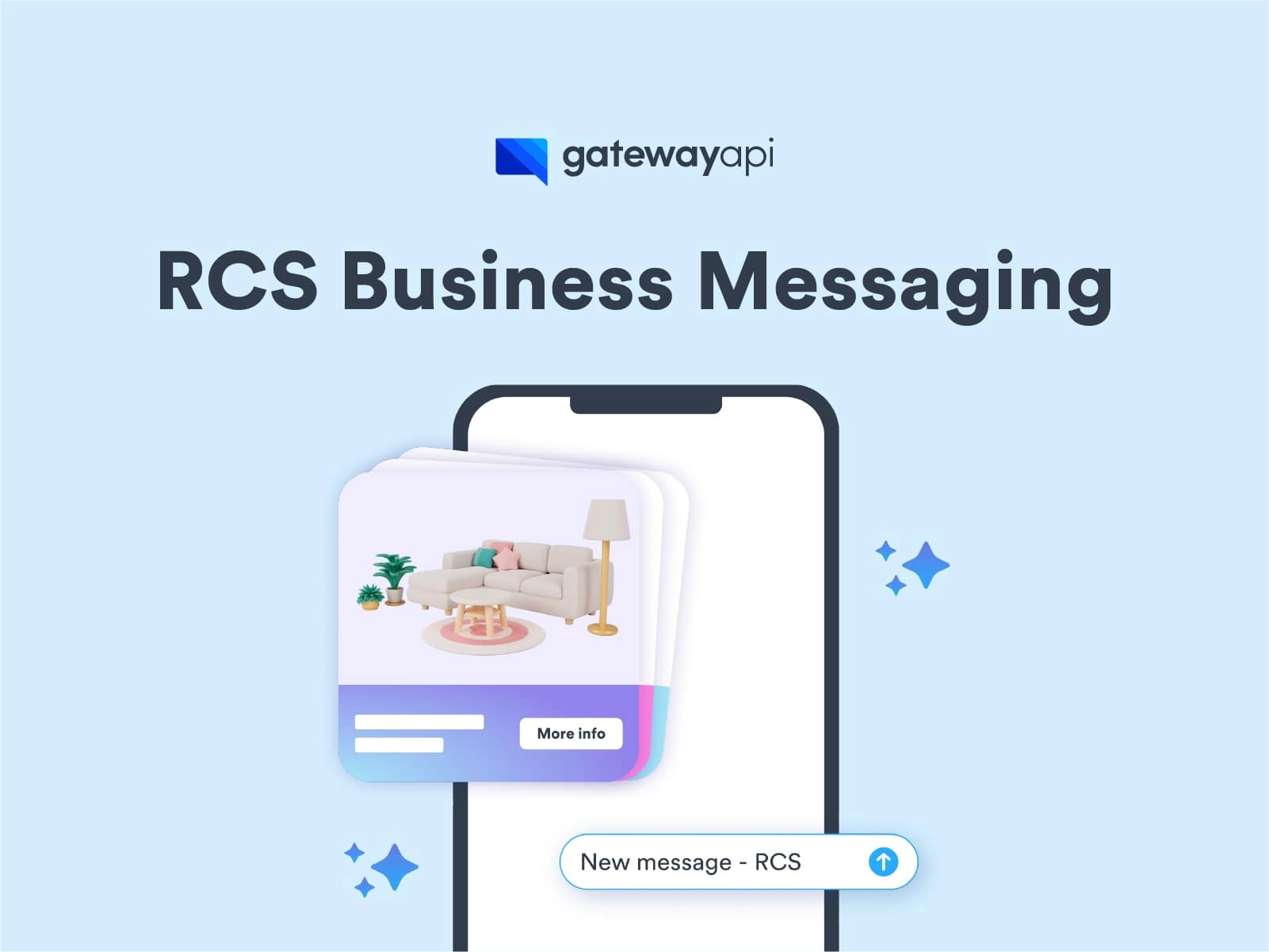
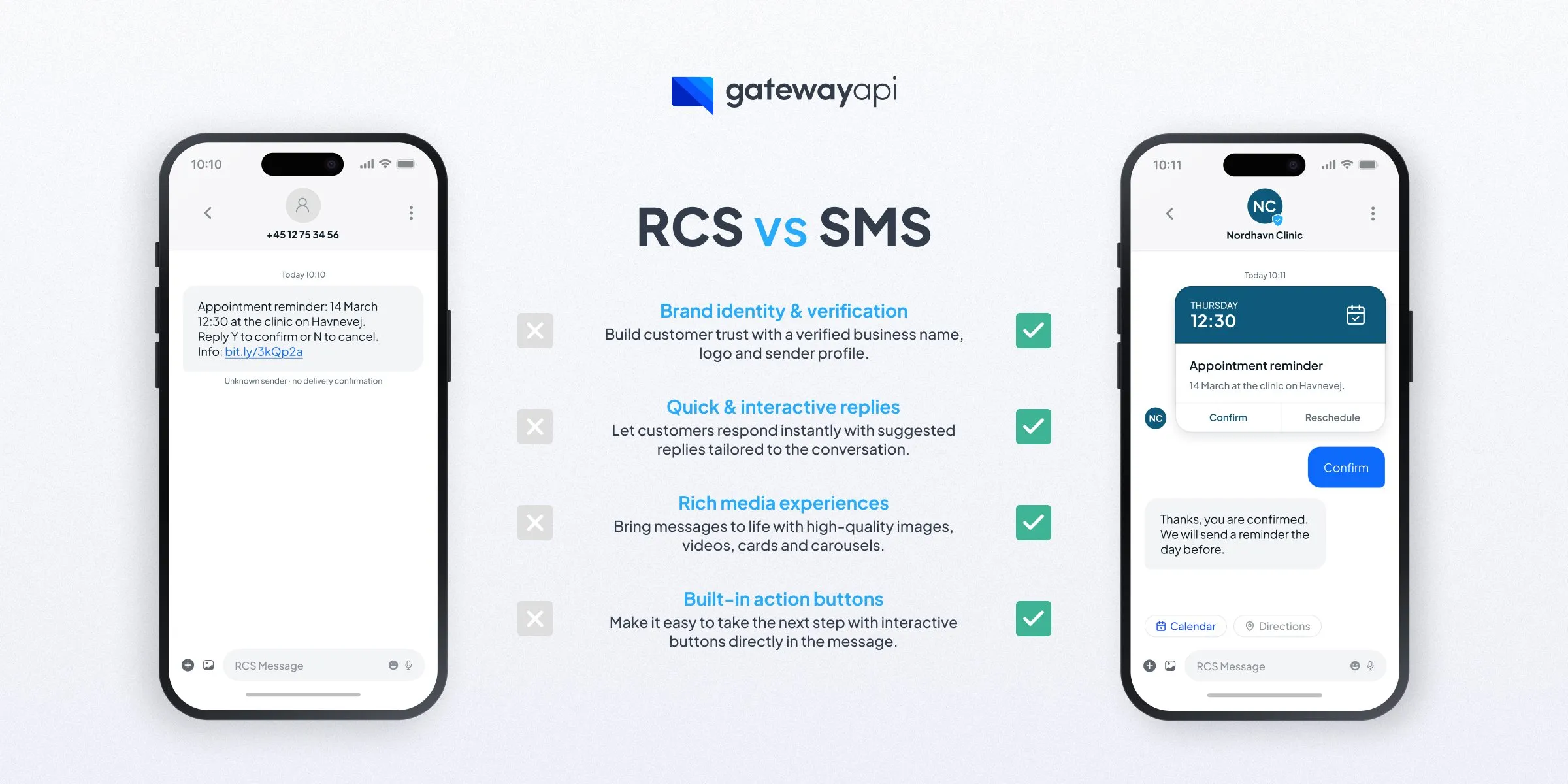
Interactive features give RCS marketing a clear edge over traditional SMS. While standard text campaigns rely on static copy and links that force users into an external mobile browser, RCS engages customers directly inside their inbox.
Customers can browse product cards, select options via quick-reply buttons and confirm reservations without leaving their inbox. This direct interaction helps cut through the noise and improves conversion rates. Using SMS fallback guarantees offline users still receive the underlying offer.
Cross-platform compatibility across mobile platforms
Cross-platform messaging has historically created friction, which is one of the main reasons SMS remains so popular. Initially, Android embraced RCS natively through Google Messages, while Apple relied on its proprietary iMessage system, dropping cross-platform text chats back to basic SMS.
Apple’s adoption of RCS starting with iOS 18 transformed RCS into a true cross-platform standard. While peer-to-peer RCS messaging is widely supported across both operating systems, RCS business messaging support continues to roll out depending on carrier configurations and regional approvals.
Because carrier enablement varies globally, automated fallback mechanisms remain essential for making sure that the messages are delivered.
Google's role in RCS messaging
Google served as a major catalyst for global RCS adoption by taking the lead in terms of getting a global standard rolled out. This framework helped resolve regional carrier fragmentation and built a unified backbone for business messaging.
Today, Google Messages, where RCS is included, functions as the default application on billions of Android phones, supporting verified senders and interactive buttons.
Security and compliance
Traditional SMS acts like an unencrypted “postcard”, leaving it vulnerable to interception and fraud. RCS Business Messaging elevates security by using TLS encryption to protect data in transit between devices, platforms, and carrier networks, making it a “sealed envelope” if we stay true to the post metaphor. Note, that while peer-to-peer RCS chats support full end-to-end encryption, business messaging decrypts traffic to enable features like interactive chatbots and automated spam scanning.
RCS’ strongest feature is Verified Senders. Companies undergo strict identity and brand checks to receive an official verification mark, drastically reducing phishing and spoofing risks.
Because message routing often touches cloud infrastructure hosted by US providers (such as Google Jibe), European enterprises must assess their compliance requirements under GDPR as well as data sovereignty frameworks.
Global Messaging API - For SMS & RCS
With the launch of GatewayAPI’s unified Messaging API, you can configure RCS with SMS fallback right out of the box using a single API. The platform handles channel selection automatically. When a message is sent, the platform determines whether the recipient is RCS-enabled. If supported, the full interactive RCS message is delivered. If the recipient's device or network does not support RCS, or if RCS delivery fails, the system falls back to delivering the text content via standard SMS.
This turnkey setup allows your development team to hit the ground running without spending weeks building custom routing logic behind the scenes.